Technical presentation
| Bottling : | Août 2025 |
|---|---|
| Acquired alcohol : | 12 ° |
| Residual sugar : | Less than 0.5 g/l |
| Total acidity : | 3.3 g/l H2SO4 (5.1 g/l Acide Tartrique) |
| pH : | 3.4 |
| Yield : | 65 hl/ha |
| Optimum tasting : | 2026/2030 |
| Average age of vines : | 21 years |
| Grape variety : | Pinot Blanc |
| Terroir : | Clos Windsbuhl, Herrenweg de Turckheim |
| Sweetness index : | 1 |
| Soil : | Gravely soil , Muschelkalk calcareous |
Description of the wine Pinot Blanc 2024
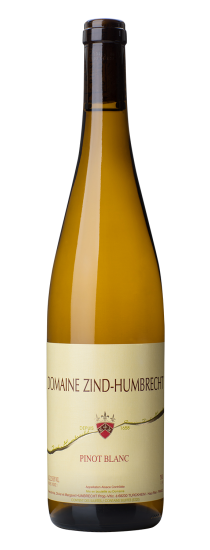
Since 2022, this wine is made from a larger part of vineyards located on calcareous soils. We still use our Pinot-Blanc/Auxerrois from the Herrenweg valley floor, but a greater part comes from a vineyard located just below the Clos Windsbuhl walls on Muschelkalk limestone. The Pinot-Blanc grape variety brings structure and the Auxerrois can also have a great acidity (from Hunawihr for example) but is also more aromatic. In Alsace, we can call such blended wines Pinot-Blanc for simplification, even if in most situations the two grapes are vinified together. Auxerrois vines look like Chardonnay at the exception of a little detail on the petiolar sinus. An early harvest allowed for a fast fermentation that produced a dry wine.
Tasting notes
8/2025: yellow pale colour. The nose is quite expressive showing a delicate combination of white fruits (peach, pears…) combined with floral notes. The palate is very dry with no aggressivity. The long total lees contact brought some density and an agreeable velvety mouthfeel. A nice ripe acidity, associated to some mineral/saline texture, reenforces the presence of this wine. Not a light weight, just delicately shaped and so easy to drink.
| Ingredients: grapes, sulfites | ||||
| Average nutritional values per 100 ml | ||||
| Energy | 292 kJ / 70 kcal | |||
| Carbohydrates | 0.7 g | |||
| of which sugars | <0.5 g | |||
| Contains negligible amounts of saturated fats, protein and salt. | ||||