Technical presentation
| Bottling : | Août 2025 |
|---|---|
| Acquired alcohol : | 11.5° |
| Residual sugar : | 0.4 g/l |
| Total acidity : | 3.75 g/l H2SO4 (5.8 g/l Acide Tartrique) |
| pH : | 3.6 |
| Yield : | 51 hl/ha |
| Optimum tasting : | 2025-2030 |
| Average age of vines : | 46 years |
| Grape variety : | 15 % Muscat Ottonel, 85 % Muscat d'Alsace |
| Terroir : | Herrenweg de Turckheim |
| Sweetness index : | 1 |
| Soil : | Quaternary gravels and silts |
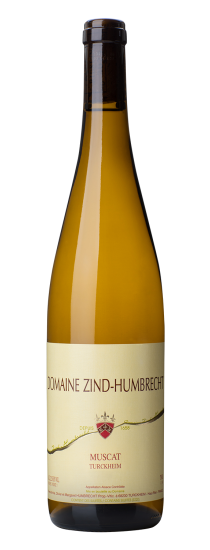
Description of the wine Muscat Turckheim 2024
In Alsace, the Muscat Ottonel is dominant, but we always preferred the Muscat Petit Grain or Muscat d’Alsace. It is a tougher grape to ripen but will keep a more moderate alcohol level and much better acidity. Just like the Gewurztraminer planted in this area, we can achieve a good ripeness early, allowing us to produce a very dry style without excessive power. The gravelly soils of the Herrenweg vineyard allow for a faster ripening. It may be a valley floor vineyard but being located at the opening of a large valley, it benefits from longer sunshine hours than most hillsides. Usually, this wine ferments vigorously and always finishes dry.
Tasting notes
8/2025: Pale yellow colour. There is no doubt possible if guessing the grape variety when nosing this wine! The nose, and palate, displays elegant and delicate floral aromas which are a great invitation to taste the wine. The palate is light and delicate, but quite persistent with a nice acidity. Dry finish also marked with the typical tannins that bring a certain structure to the wine and will, surprisingly, also allow for some ageing. This is the perfect spring/summer wine, uncomplicated and so satisfying.
| Ingredients: grapes, sulfites | ||||
| Average nutritional values per 100 ml | ||||
| Energy | 279 kJ / 67 kcal | |||
| Carbohydrates | 0.7 g | |||
| of which sugars | 0.0 g | |||
| Contains negligible amounts of saturated fats, protein and salt. | ||||