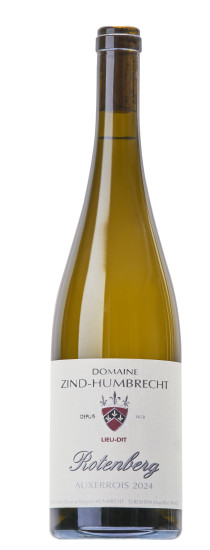
Technical presentation
| Bottling : | January 2026 |
|---|---|
| Acquired alcohol : | 12 ° |
| Residual sugar : | 0.8 g/l |
| Total acidity : | 3.8 g/l H2SO4 (5.8 g/l Acide Tartrique) |
| pH : | 3.3 |
| Yield : | 50 hl/ha |
| Optimum tasting : | 2026/2036 |
| Average age of vines : | 43 years |
| Grape variety : | Auxerrois |
| Terroir : | Rotenberg |
| Sweetness index : | 1 |
| Soil : | Red limestone Oligociene period, Steep slope, West North West facing |
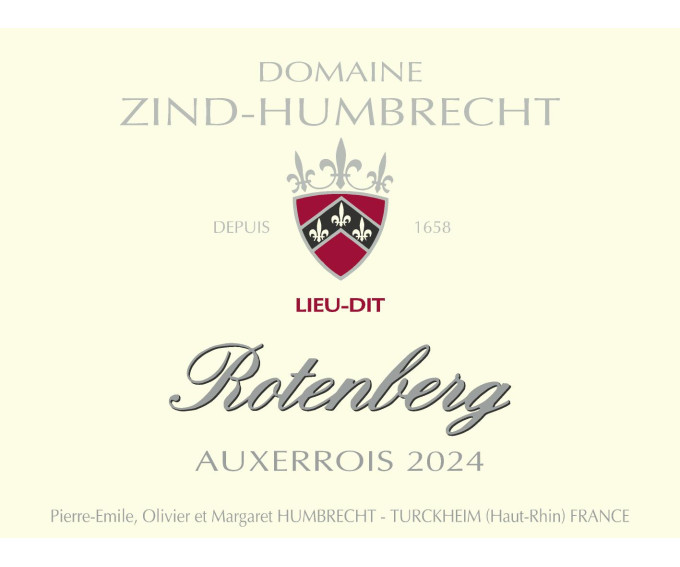
Description of the wine Auxerrois Rotenberg 2024
On the westernmost slope of the Rotenberg hill, my father and grandfather Emile Zind chose to plant the Auxerrois grape variety. Today, this early-ripening, slightly aromatic grape is perfectly suited to the late climate of this location. The limestone substrate, rich in iron, also gives the wines a firm structure. Its steep, west-facing slope keeps the vines in the shade late in the morning and sheltered from the setting sun, which is often hot in summer. For many years, these grapes were used to balance the Auxerrois from the gravelly soils of Turckheim, but since the 2021 vintage we have been vinifying and bottling them separately. It is a small cuvée that benefits from the same vinification process as all the estate's great wines. Well worth discovering!
Tasting notes
1/2026: Intense yellow color. This wine is always surprising! The nose offers a beautiful array of aromas of white fruits, honey, citrus fruits... with an insolent intensity for such a young wine. The texture on the palate is smooth and velvety, with no harshness. The limestone structure brings a racy finish linked to a ripe and prominent acidity, magnified by the Rotenberg terroir. This is a very dry wine that reveals beautiful purity.
| Ingredients: grapes, sulfites | ||||
| Average nutritional values per 100 ml | ||||
| Energy | 291 kJ / 70 kcal | |||
| Carbohydrates | 0,8 g | |||
| of which sugars | <0.5 g | |||
| Contains negligible amounts of saturated fats, protein and salt. | ||||