Technical presentation
| Bottling : | January 2026 |
|---|---|
| Acquired alcohol : | 13 ° |
| Residual sugar : | 3.2 g/l |
| Total acidity : | 5.0 g/l H2SO4 (7.6 g/l Acide Tartrique) |
| pH : | 3.09 |
| Yield : | 35 hl/ha |
| Optimum tasting : | 2028-2049+ |
| Average age of vines : | Vines planted in 2016 |
| Grape variety : | Riesling |
| Terroir : | Grand Cru Hengst |
| Sweetness index : | 1 |
| Soil : | Calcareous Marl from the Oligocene period, East facing, medium/steep slope |
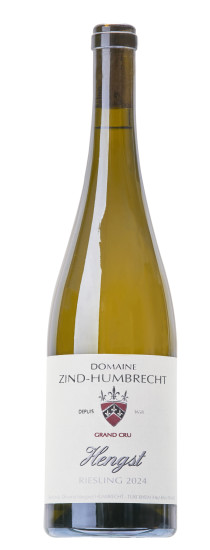
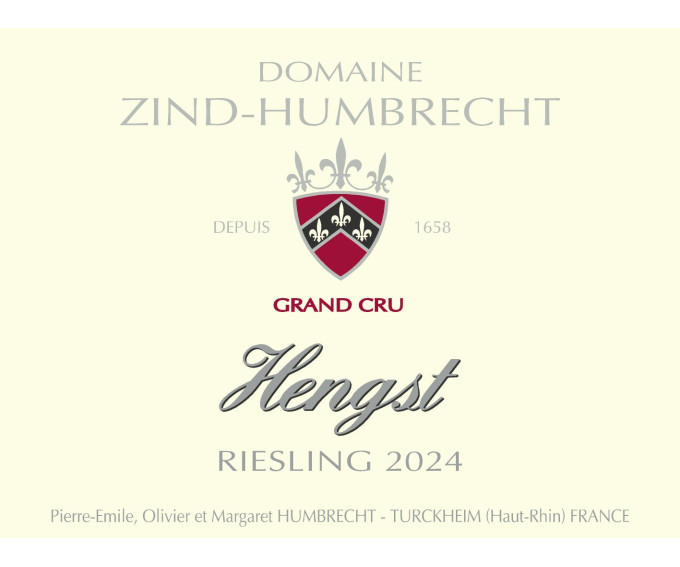
Description of the wine Riesling Grand Cru Hengst 2024
Our two Riesling parcels are located on the eastern side of the Grand Cru Hengst. The majority of this Grand Cru faces south/southeast, but we felt that the small eastern slope would be much better suited to Riesling than to Gewurztraminer, the emblematic grape of this cru. Pinot Noir would have been an alternative, but that will come soon… Hengst produces wines that combine power, refinement, and elegance. These characteristics are found in the Riesling wines. Benefiting from a significant slope on the upper part of the terroir and a substantial presence of limestone rocks, this calcareous marl terroir has an excellent capacity to drain excess water. This is an essential agronomic property in 2024, which explains the high quality of this wine.
Tasting notes
1/2026: Intense pale yellow color. Still discreet, the nose is strongly marked by its limestone origin. There are citrus notes, strong minerality, and a hint of tension on the acidity. On the palate, the wine is juicy, intense, and rich, yet precise. The acidity perfectly balances the density imparted by this great terroir. The finish is long and harmonious, with a mouthwatering, well-present acidity. A great Hengst for aging!
| Ingredients: grapes, sulfites | ||||
| Average nutritional values per 100 ml | ||||
| Energy | 318 kJ / 77 kcal | |||
| Carbohydrates | 1.0 g | |||
| of which sugars | < 0.5 g | |||
| Contains negligible amounts of saturated fats, protein and salt. | ||||