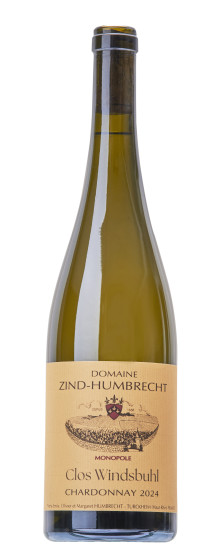
Technical presentation
| Bottling : | January 2026 |
|---|---|
| Acquired alcohol : | 12.5 ° |
| Residual sugar : | 2.9 g/l |
| Total acidity : | 3.75 g/l H2SO4 (5.8 g/l Acide Tartrique) |
| pH : | 3.2 |
| Yield : | 50 hl/ha |
| Optimum tasting : | 2027/2039 |
| Average age of vines : | 35 years |
| Grape variety : | Chardonnay |
| Terroir : | Clos Windsbuhl |
| Sweetness index : | 1 |
| Soil : | Calcaire Oligocène, Medium slope, Muschelkalk calcareous, Oolithic calcareous |
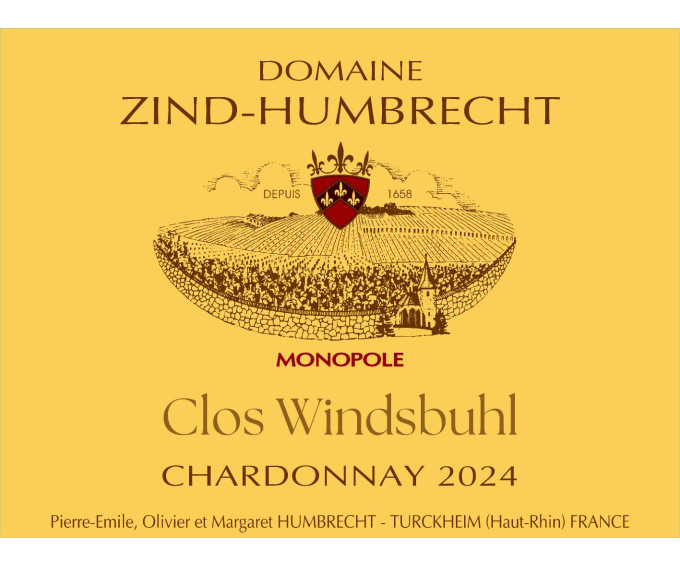
Description of the wine Chardonnay Clos Windsbuhl 2024
Chardonnay is planted on the southern slope of Clos Windsbuhl, which is actually the coolest part of the vineyard, as it is located beneath the imposing forest that overlooks it. The choice of this grape variety was the result of a discussion with a close friend of my father's, a Burgundian winegrower. The Muschelkalk limestone soil is very similar to that of the Bajocian in Burgundy. In 1989, it was easier to find interesting Chardonnay plants than Pinot Blanc (another alternative), which explains our decision. The late climate of Windsbuhl allows for late ripening while preserving significant acidity. This wine is vinified in large casks and on total lees until bottling.
Tasting notes
1/2026: Bright yellow color. Upon opening, the wine is still marked by its very long aging on lees. The youthful reduction quickly disappears after decanting. The wine then reveals an aromatic palette of honey, wax, citrus fruits, etc. On the palate, this Chardonnay reveals beautiful intensity while remaining elegant. Silky texture with good power, despite moderate alcohol content. This wine will need time to fully reveal itself, like all Windsbuhl wines!
| Ingredients: grapes, sulfites | ||||
| Average nutritional values per 100 ml | ||||
| Energy | 306 kJ / 74 kcal | |||
| Carbohydrates | 1.0 g | |||
| of which sugars | < 0.5 g | |||
| Contains negligible amounts of saturated fats, protein and salt. | ||||